






By Duncan Banyatsi – Head of Operations, FSG Limited
In the assurance and funeral services sector, dignity is often spoken about as an outcome – the final measure of whether a family feels supported in their most vulnerable moment. Yet dignity is also shaped long before a service is delivered. It is built through the relationships formed, the partnerships sustained, and the local ecosystems strengthened over time.
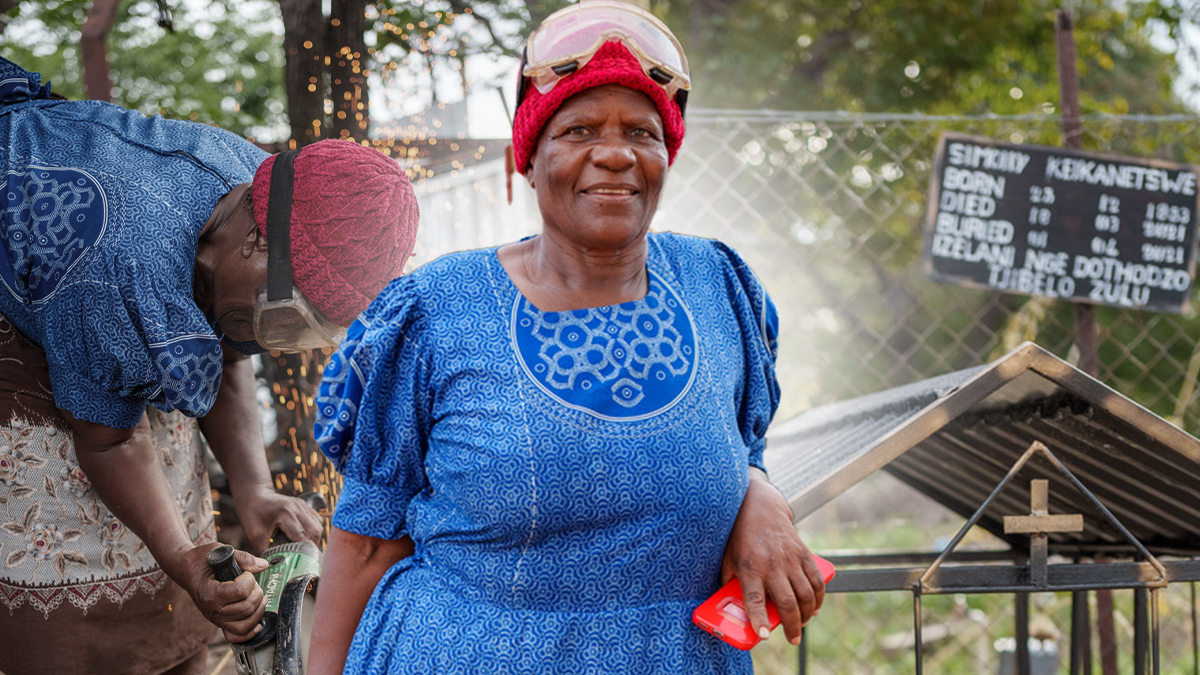
One powerful illustration of this is the journey of Batandi Gwamulumba, founder of B-T Ndothama StellHardworks, and someone we are privileged to have in our local business ecosystem. Her path into welding began in 2006, sparked by curiosity and determination to succeed in a field traditionally dominated by men. Over the years, she developed her skills through hands-on experience and gradually established a small enterprise that now employs between four and five people, depending on the scale of each project.
In June 2025, FSG began engaging local suppliers nationwide following the closure of its manufacturing operations. This transition reflected a strategic commitment to strengthen community-based value chains and deepen economic participation within the areas the organisation serves. The collaboration with B-T Ndothama StellHardworks quickly demonstrated that such decisions extend far beyond operational efficiency. They have the potential to shape livelihoods and reinforce community resilience.
The production of grave covers (a key component of dignified funeral care) may appear to be a technical detail in the broader service journey. Yet it carries deep cultural and emotional significance. When these essential elements are crafted locally, they become more than functional products. They embody community ownership, respect for tradition, and a shared sense of responsibility in supporting families during times of loss. In line with this commitment, FSG Limited has to date invested BWP 2,827,000.00 in supporting grave cover suppliers across the country, reinforcing its dedication to empowering Small and Medium Enterprises (SMEs) while strengthening local capacity within this meaningful aspect of funeral care.
For Ms. Gwamulumba, the partnership represents both recognition and opportunity: “Ke itumetse go bona motho wa mme a neelwa tshono ya go itsholetsa. FSG ke kompane e ratang go direla Batswana, ba rotloetsa thata rona ba dikgwebo potlana.”
Her words capture the importance of trust and inclusion in enabling small businesses, particularly those led by women: to thrive. They also highlight the broader role that corporate institutions can play in creating pathways for sustainable enterprise growth.
This is where the concept of the care economy becomes particularly relevant. Across the world, there is increasing acknowledgment that sectors centred on caregiving, social support and community well-being are fundamental drivers of economic development. In Botswana, the care economy manifests through funeral services, assurance, health support systems, and the networks of local providers who contribute to dignified, culturally aligned care.
Small enterprises such as B-T Ndothama StellHardworks are integral to this ecosystem. Their impact extends beyond the delivery of goods or services. They generate employment, build technical capacity, and strengthen social cohesion. In doing so, they help ensure that care remains rooted in the communities it is meant to serve.
Stories like Ms. Gwamulumba’s also reflect the evolving landscape of entrepreneurship in Botswana. Women are increasingly stepping into technical and leadership roles, redefining professional norms and inspiring others to pursue their ambitions. Workshops and small production spaces are becoming sites of empowerment, where innovation and determination intersect with economic opportunity.
As Botswana continues in our collective journey toward inclusive growth, the care economy offers a powerful lens through which to understand development. It reminds stakeholders that sustainable progress is not only measured through infrastructure or financial performance, but also through the strength of community networks and the accessibility of opportunity.
This is but one example of how purposeful partnerships can contribute to a more resilient economic fabric. By supporting community enterprises, organisations can help create conditions in which dignity is not only delivered through services but also embedded in the very structures that enable care. It is not simply our duty; it is our privilege.
Why? Because in the quiet strength of businesses like B-T Ndothama StellHardworks lies a compelling vision for Botswana’s future; one where enterprise, empathy and cultural understanding converge. This is how we build an economy that is both inclusive and profoundly human.