


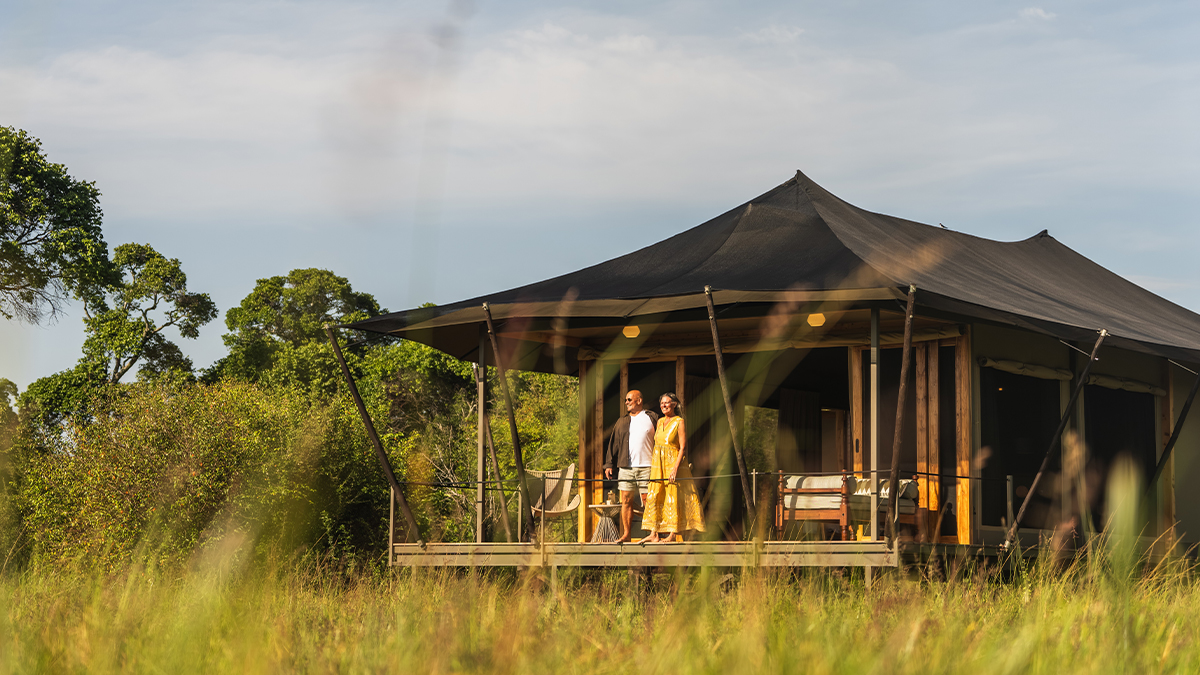
Set within the iconic Masai Mara National Reserve’s Mara Triangle, Wilderness Mara opens its doors as a fully rebuilt safari camp that seamlessly blends exceptional wildlife encounters, authentic hospitality and a deep commitment to conservation. The opening marks an exciting new chapter in Wilderness’ East African journey, strengthening its presence in one of Africa’s most celebrated wildlife destinations.
Framed by the dramatic Oloololo Escarpment, the camp occupies a prime position, offering outstanding year-round game viewing. Guests can encounter resident lion prides, large elephant herds, and even critically endangered Eastern black rhino, while the world-famous Great Migration brings over a million wildebeest and zebra through the greater Masai Mara ecosystem in a seasonal spectacle of extraordinary scale.
Formerly the legendary Little Governors’ Camp, Wilderness Mara honours a safari legacy spanning more than five decades while embracing Wilderness’ signature conservation-led hospitality model. ‘For over 50 years, Governors’ set the standard for authenticity, conservation and community in this region. Wilderness is proud to honour and evolve that legacy – blending classic East African safari traditions with a contemporary, low-impact approach to luxury,’ said Hein Prinsloo, Wilderness Kenya Chief Executive Officer.
Situated within the Mara Conservancy-managed Mara Triangle, the camp provides privileged access to diverse habitats on both sides of the Mara River, enabling immersive wildlife experiences with fewer vehicles and a strong sense of exclusivity. Twelve tented suites, including one family unit, are thoughtfully positioned along a seasonal marsh, designed to blend into the landscape while offering expansive views and an uninterrupted connection to nature. Interiors by Chris Payne of White Elephant Trading Company, in collaboration with Wilderness, draw inspiration from the Mara itself, combining natural textures, locally crafted furnishings and sustainably sourced materials in a design language firmly rooted in place.
The guest experience extends beyond traditional safari, encompassing wellness, cultural immersion and a culinary journey that celebrates Kenya’s rich flavours and heritage. Wellness is woven throughout the guest’s stay, offering restorative moments between game drives and time spent exploring the Mara. Tucked away within a tranquil pocket of indigenous forest, the lodge’s dedicated wellness sanctuary features a serene spa alongside a fully equipped gym, creating a peaceful retreat for both relaxation and rejuvenation. Signature treatments include the Savannah Flow Massage, inspired by African healing traditions to promote deep relaxation and balance, and the Maasai Wood & Earth Journey, which combines therapeutic massage with hand-carved wooden tools inspired by the traditional Maasai warrior staff, creating a deeply grounding and restorative experience.
Complementing this sense of wellbeing is a food journey shaped by open-fire cooking, locally sourced ingredients and regional influences. From bush breakfasts and scenic stops to sundowners and memorable evenings beneath the stars, each meal offers an authentic taste of Kenya. Among the highlights is the camp’s immersive Manyatta Dinner, a vibrant celebration of Maasai culture, community and storytelling. Set against the golden hues of the Mara at sunset, guests gather around the crackling boma fire as dishes are prepared over cast iron pots and traditional jiko cooking stations. Inspired by Manyatta, the circular homesteads that have long served as the heart of Maasai family life, the experience blends regional flavours with storytelling, and traditional song and dance, creating a genuine sense of place rather than a staged cultural performance. Made all the more special by the Wilderness Mara team, whose familiar faces take centre stage throughout the experience, the evening comes alive through its warmth, authenticity and heartfelt hospitality.
At its core, Wilderness Mara is guided by a commitment to conservation and community. Through Wilderness’ Impact framework to Educate, Empower and Protect, the camp supports initiatives including Children in the Wilderness, the Maa Trust, and the Pangolin Project and Mara Raptor Project. This work extends beyond the Masai Mara National Reserve itself to the Nyekweri Forest and Oloololo Escarpment, where efforts focused on reforestation, sustainable livelihoods and wildlife protection help safeguard the ecological systems that sustain the Mara landscape.
‘The Mara is more than a destination – it is a living ecosystem shaped by the connection between people, wildlife and landscape. Our role is not only to share its extraordinary beauty with guests, but to help protect it for generations to come,’ concluded Hein.
To view a recommended East Africa safari itinerary please click here.
For more information, click here: