


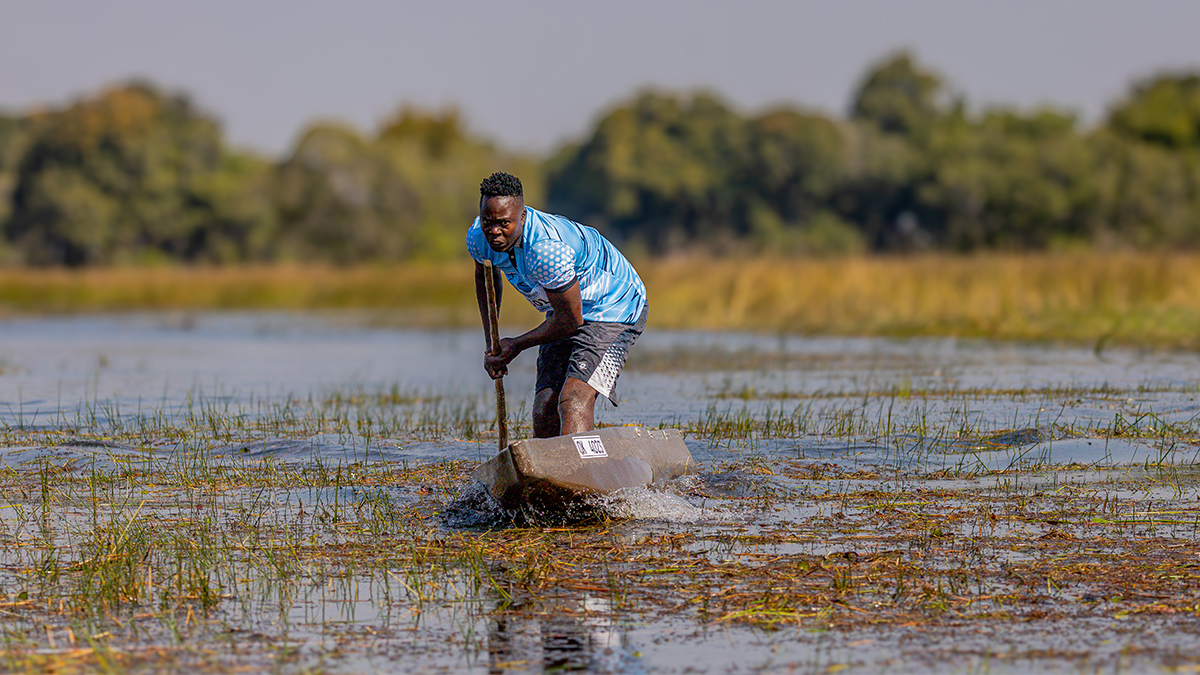
The annual Nkashi Classic, organized by the Nkashi Trust, was held this weekend in Seronga, Botswana. Lasty Kedisa and Phixwa Resenolotswe put up the fastest overall times across the male and female categories (respectively) emerging as the Okavango Delta’s fastest mokoro polers. (For the full list of this year’s winners in each category, see below.)
This year’s Nkashi Classic was one of the most highly attended since the inception of the event in 2018, welcoming nearly 90 competitors and promoting the use of mekoro and preservation of cultural heritage.
The Nkashi Classic is supported by Okavango Eternal — a 10-year partnership between the National Geographic Society and De Beers — which works alongside the Nkashi Trust and the Wild Bird Trust family of organizations to help protect the source waters of the Okavango River Basin and support sustainable community livelihoods.
The Nkashi Classic has grown into a community-wide celebration of the Okavango Delta’s cultural and natural heritage bringing together conservation education and traditional knowledge with sport and livelihood opportunities that champion the people of the Delta and its unique natural environment.
The event reflects the spirit of the nkashi — the pole used to propel a mokoro — which has become a symbol of progress rooted in culture and community. That same philosophy guides the work of the Nkashi Trust, whose mission is grounded in the belief that traditional knowledge propels both people and conservation forward.

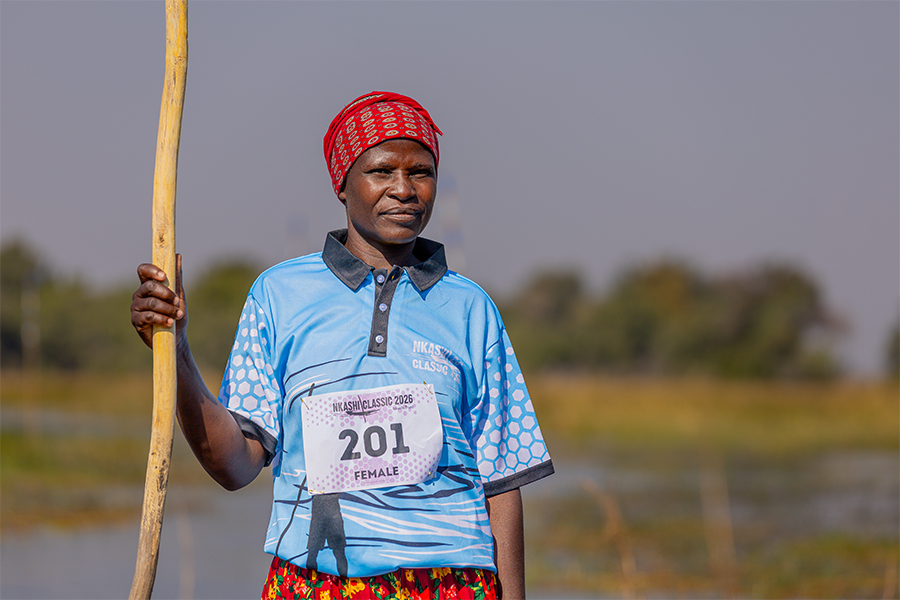
“The Nkashi Classic has become much more than an annual sporting event. It celebrates the shared cultural heritage and local pride of the communities in and around the Delta and the collective progress that drives us toward a brighter future,” said Koketso “Koki” Mookodi, National Geographic Explorer and Botswana Country Director for the National Geographic Okavango Wilderness Project (NGOWP). “It is also a reflection not only of where we are going, but of the importance of where we have come from and the value of carrying that traditional knowledge to future generations.”
The Nkashi Classic embodies the broader vision of the Okavango Eternal partnership, which supports locally led conservation efforts that strengthen communities while helping protect the Delta and its life-sustaining waters. Beyond the race, the partnership is supporting the Nkashi Knowledge Bus, which is taking educational resources on the road to the Delta communities; and two Nkashi Knowledge Centers, physical spaces and year-round hubs for education, scientific research, financial inclusion workshops and small enterprise development.
“The Nkashi Classic is a powerful example of what happens when communities lead conservation,” said Kara Ramirez Mullins, chief advancement officer at the National Geographic Society. “It has become a centerpiece of the National Geographic Okavango Wilderness Project. And thanks to Okavango Eternal, our long-standing partnership with De Beers, which partially funds NGOWP, we’ve been inspired to think bigger — evolving the Nkashi Classic into a year-round movement. Through an educational bus and Knowledge Centers, we are connecting people with scientific discoveries, traditional knowledge, and powerful storytelling — ensuring the Delta’s traditions are preserved and shared with future generations.”
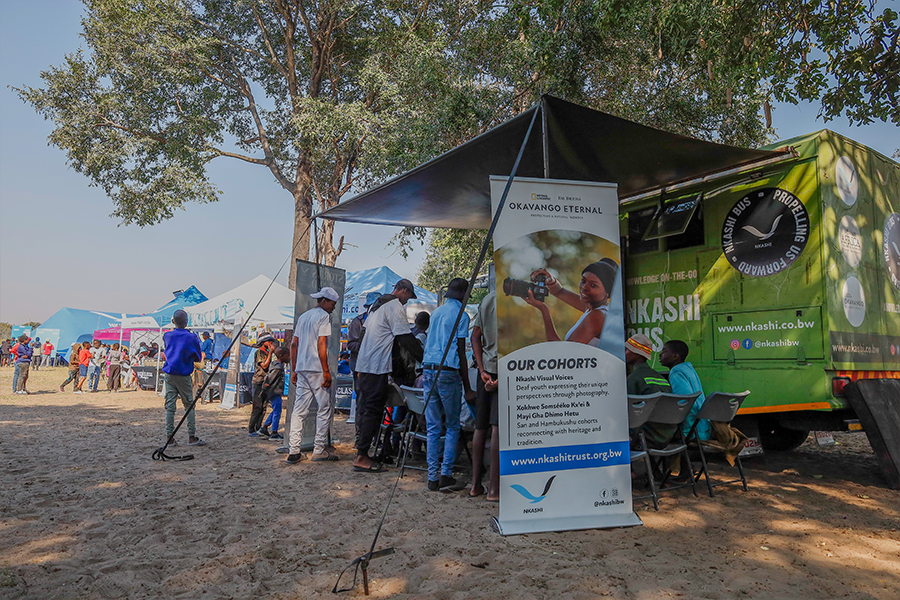
This year’s race was the culmination of a series of local qualifying heats held across the Delta in Boro, Seronga, Ikoga and Kauxwi. The finals were widely attended and included family-friendly activities and performances by Koolkat Motyiko, Serwalo, Diphera Cultural Group, Gaozo and more. Other activities featured demonstrations from the Nkashi Trust on their various projects in the Okavango Delta, including a virtual reality experience, exciting science experiments, conservation education talks, enterprise development stalls, and an exhibition of the Nkashi Knowledge Bus. Contestants in this year’s race also included members of the Nkashi Mokoro Trails program, a long-term initiative supported by the Nkashi Trust and Okavango Eternal to develop community-led mokoro trails in the Okavango Delta, enabling local communities to participate more directly in the tourism economy.
This year’s first place winners included (a complete list can be found here):
- Youth | 18–30 years
- Male: Lasty Kedisa
- Female: Obvious Sedisa
- Adult | 31–54 years
- Male: Motunda Wandumbi
- Female: Phixwa Resenolotswe
- Veteran | 55+ years
- Male: Mahupe Botsang
- Female: Khutsafalo Qhokhwe
- Mixed Doubles | 18+ years
- One male & one female poler: Ketshepaone Tshwenyego and Gareboife Mosupa